I couldn’t help but give you a sequel to my recent post about cognitive resilience when I read about the radical honesty that NBA player Tyrese Haliburton recently displayed. What made his story so powerful was that he demonstrated vulnerability as a leadership strength while under incredible public scrutiny.
During the last season, he opened up about his struggle with injuries, poor form, and abusive online feedback that led to his anxiety and depression to the point where he “couldn’t look in the mirror” and avoided showing up to work.
It’s often the people you least expect who say they’re struggling with their mental health. That’s why his fans shared a collective nod when typically joyful Haliburton admitted to being consumed by self-doubt and anxiety during a slump, which was compounded by criticism in the media.
“I hear everything . . . I see everything that people are saying,” said Haliburton. “When you’re playing badly, people want to trade you. People are saying you’re overhyped. That stuff wears on you.”
Physical injuries gave Haliburton a chance to commit to mental recovery while he rehabilitated both his hamstring and his Achilles. Rather than simply push through both physical recoveries, he said, “I want to take this time to just keep growing my mind for the game.”
Here are some examples of Haliburton’s approach to mentally reflecting and resetting that underscore the framework I shared for leaders in a cognitive resilience post:
Transparency around mental load
Haliburton publicly acknowledged emotional struggle, the toll it was taking on his game, and his anxiety during his slump.
Never miss a post about leadership, transparency, and trust by signing up for my weekly mailing list, delivered right to your inbox. Sign up here.
Taking intentional brain breaks
Haliburton slowed down to recover physically during injuries but used downtime to sharpen his mental focus.
Lean into shared human struggle
His honesty fostered connections with teammates and fans, breaking the stigma around mental strain in elite performance.
Cultivating a culture of well-being
By modeling vulnerability in a high-profile setting, Haliburton encouraged everyone in his sphere to take mental health seriously.
Just as Haliburton came back stronger post-injury by nurturing both mind and body, so too leaders can recover from internal fog by leaning into self-awareness and emotional clarity. His commitment to mental recovery wasn’t an afterthought—it was part of his performance strategy. He didn’t just rehab his body; he trained his mind to be steadier, more focused, and more grounded under pressure.
Haliburton led the Pacers through a miraculous run—first-round upset, conference win, and the team’s first NBA Finals appearance in 25 years. He carried the team until a devastating Achilles injury in Game 7 cut his season short. But it wasn’t just his stats that defined the moment—it was his vulnerable, honest reaction and the grace with which he handled disappointment.
His example reminds us that real leadership isn’t about always being strong. Sometimes, it’s about telling the truth, taking a breath, and showing others what resilience really looks like from the inside out.
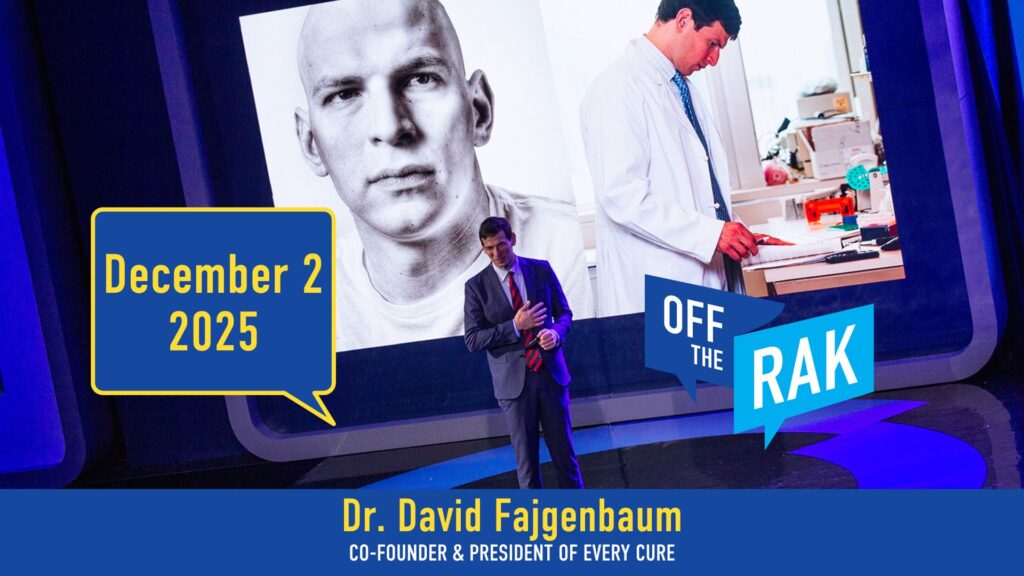
Next on Off the Rak
December 2 at 12PM EST
How one doctor’s near-death became a lifeline for thousands, rewriting the rules of medicine and modeling transformative leadership
Dr. David Fajgenbaum is the founder of Every Cure, an AI-driven nonprofit organization on a mission to identify and advance new uses for existing, often generic, medicines to treat diseases with unmet needs. Consider a gift for #GivingTuesday by visiting EveryCure.org