In Part 1 of a three-part series on my conversation with Brad Deutser, I wrote about the mindset shift that starts everything: believing that hard things happen for us, not to us.
In Part 2, we talked about how that belief has to travel, how a leader earns the kind of trust that makes people not just agree but actually move.
In this conclusion, we talk about what happens when that trust scales past one relationship and into an entire organization. Brad calls it the “cultural ecosystem,” and it starts in a place most leaders skip right past.
Starting with people, not processes
When Brad’s team walks into an organization, they start by assuming it’s a people problem. Most leaders go the other direction. They see weak performance and reach for a new plan, a new process, and a new structure.
Brad’s team goes looking first for what’s actually true about the people, through proprietary assessments; individual conversations; and what he calls “cultural listening sessions,” or small interactive groups designed to get people out of their rehearsed answers.
The question, the deck, and the build
From there, the team runs something Brad told me is often the favorite day of a leader’s entire career. The team calls it the “Foundations of Performance” work session, and it starts by asking a company the most basic question there is: What is your purpose?
In an organization of a hundred or two hundred people, that single question produces forty to sixty different answers, every time. Brad’s team builds a custom deck of cards from those responses and has the room sort through purpose, character, and values together.
Never miss a post about leadership, transparency, and trust by signing up for my weekly mailing list, delivered right to your inbox. Sign up here.
And then, after all of that complexity, the team dumps a pile of Legos on the tables and gives the group twelve minutes to build the culture it actually wants.
It feels a little like the moment in the movie Apollo 13 when the mission control engineers had a small box of materials similar to what the crew has, and NASA asked them to build a contraption that will make the spacecraft air breathable. All the while, the CO2 was climbing, and the astronauts were losing time.
Expectations, belonging, and the intersection of we and me
The question-deck-build work leads to the idea at the center of Brad’s new book, Belonging Rules. He described belonging to me as sitting at the intersection of we and me.
On one side is what we aspire to together, the values. On the other side is what’s expected of each of us individually, the behaviors. Brad’s research shows that when both sides are clearly defined, people feel safe.
Safe in the sense that they know the norms, they understand what’s expected, and that clarity frees them up to actually go do great work instead of guessing what leadership wants from them.
Belonging, Brad reminded me, requires an invitation. Leaders have to actually invite people in, and the cultural ecosystem is what makes that invitation legible. Without it, belonging is just a word on a wall.
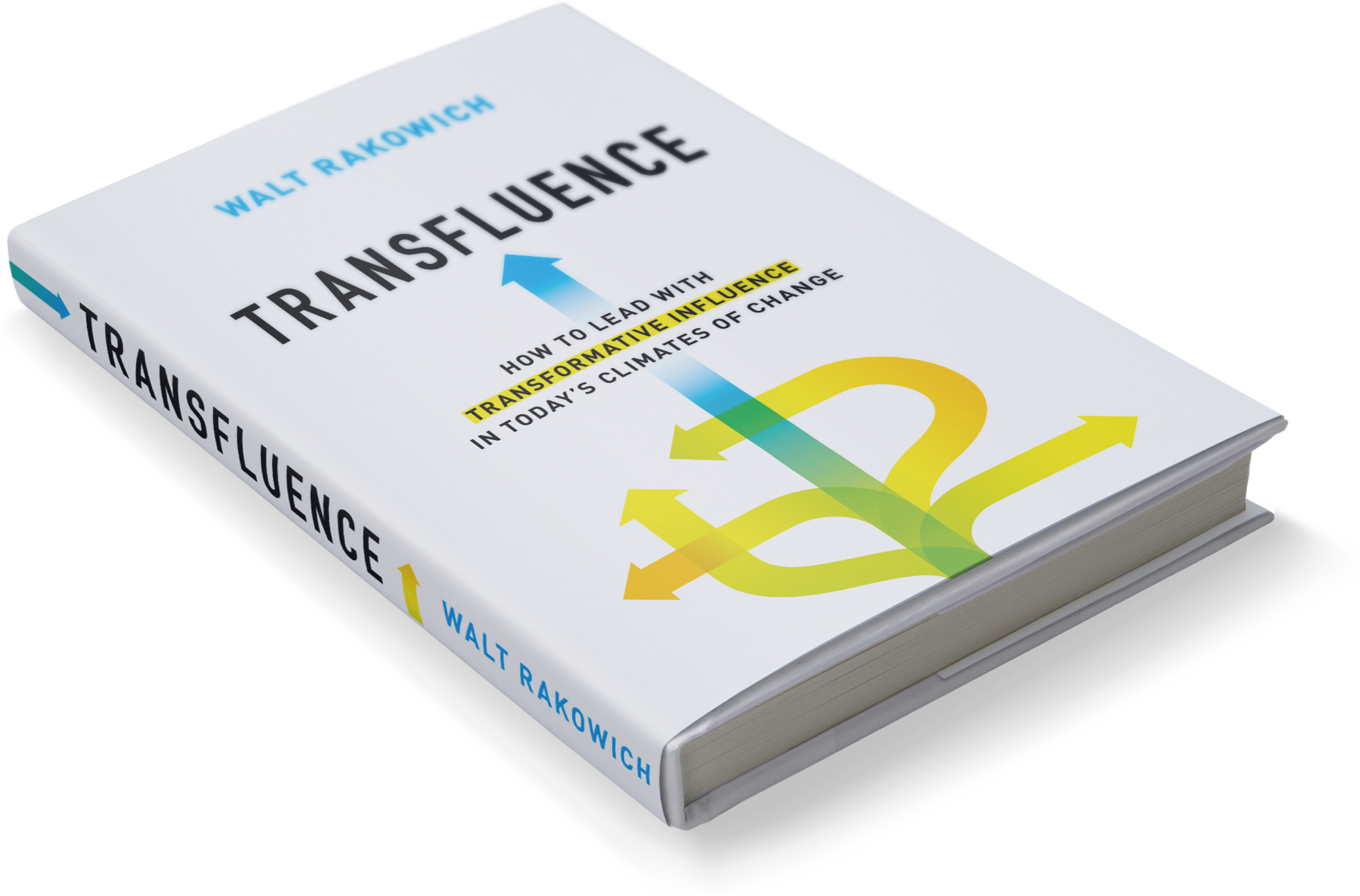
That brought us to clarity and to a story from a book Brad loves, The Other Wes Moore. Moore’s story is so insightful that I highlighted it in my own book, Transfluence. It’s about two boys with the same name, same disadvantaged Baltimore neighborhood.
One ended up in prison for life, while the other became a bestselling author and governor. We’re not products of our environment; we’re products of our expectations. When leaders make expectations clear, cultural, behavioral, and in terms of performance, people rise to meet them.
I think that’s the through line of everything Brad and I talked about across our conversation. It starts with a leader believing that hard things happen for a reason. It grows into the kind of quiet, earned trust that makes people willing to follow you somewhere uncertain. And it scales into an organization only when the leader does the unglamorous work of making purpose, values, and expectations clear enough for everyone to actually see them.
None of it happens by accident. Synchronicity and belonging take a leader willing to pause, ask better questions, and build the conditions where people can do their best work. That’s the kind of leadership I want to keep learning about, one conversation at a time. Look forward to you joining me for my next conversation.